

SynapseCommand Presented at Rheinmetall Industry Supplier Day in Vienna
Decent Cybersecurity presented SynapseCommand in Vienna, outlining a proposed decision-support application for Rheinmetall’s Battlesuite ecosystem.
Read the full updateDefence AI news, command-and-control milestones and NATO DIANA programme progress from the team building SynapseCommand.
Decent Cybersecurity presented SynapseCommand in Vienna, outlining a proposed decision-support application for Rheinmetall’s Battlesuite ecosystem.
Read the full update

SynapseCommand was present at NMIOTC’s 2026 maritime cyber conference in Crete. The operational case for sovereign AI, verifiable decision records and post-quantum security at sea.
Read the full update
Decent Cybersecurity presented SynapseCommand at an industry supplier event in Graz, introducing its approach to sovereign AI decision support for military command and control.
Read the full update
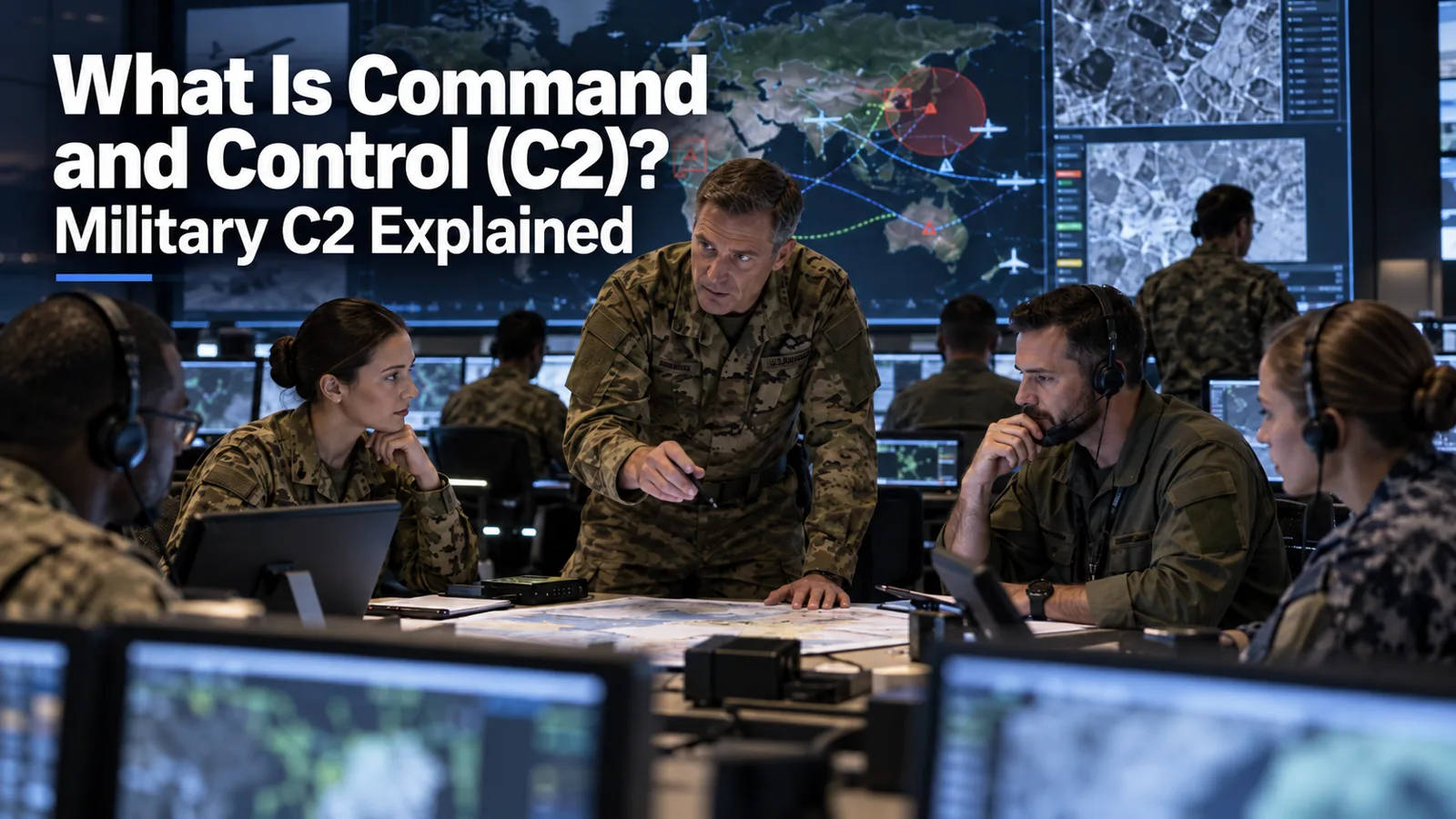
Command and control, usually abbreviated C2, is how a military commander exercises authority and direction over assigned and attached forces to accomplish a mission. This guide explains what C2 means, what supports it, how command relationships and information quality shape it, and how NATO and U.S. Army approaches relate.
Read the full update
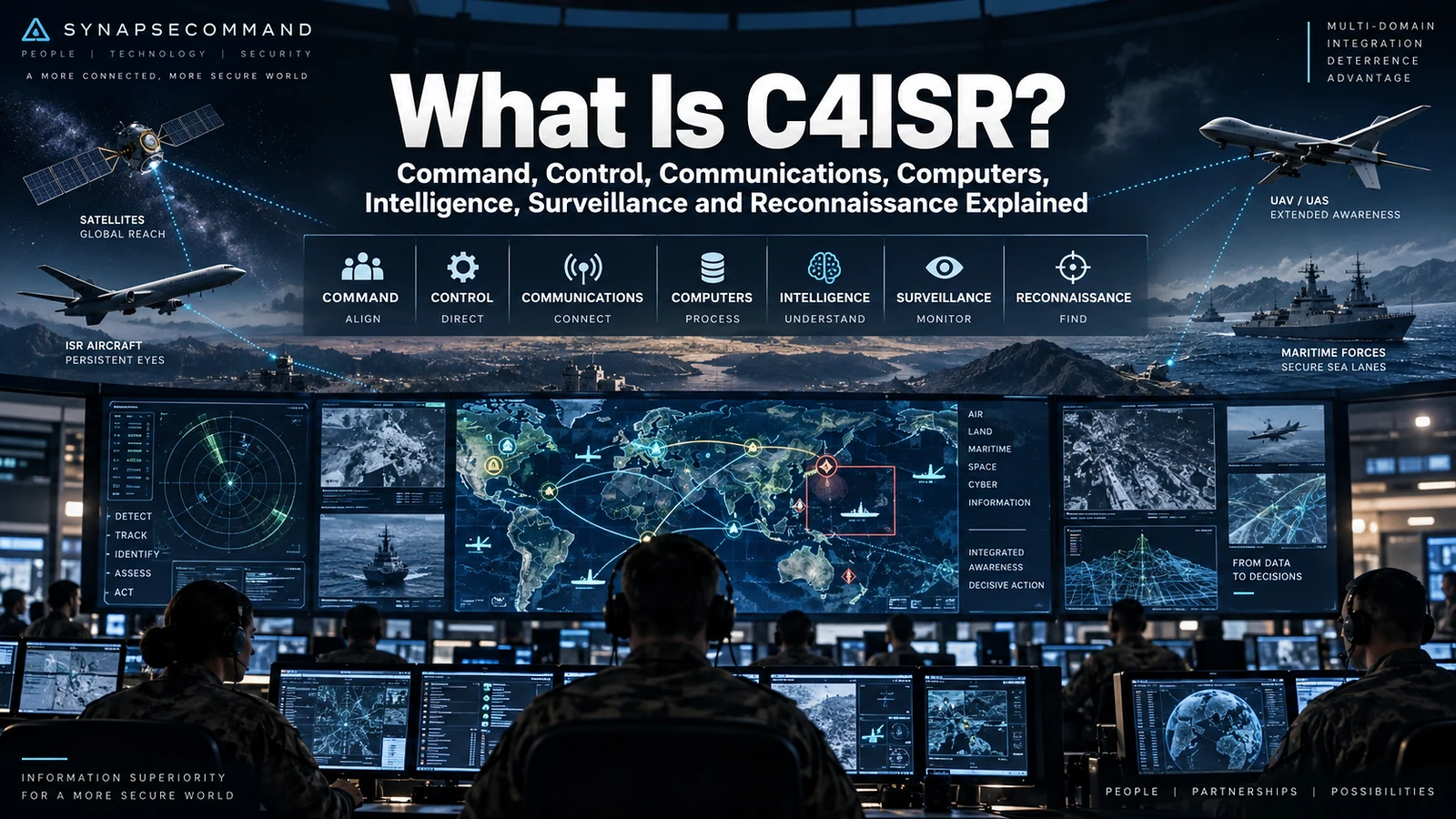
C4ISR stands for Command, Control, Communications, Computers, Intelligence, Surveillance and Reconnaissance. This guide explains what C4ISR means, how it works, how it differs from C2 and C5ISR, and why interoperability and resilience matter.
Read the full update
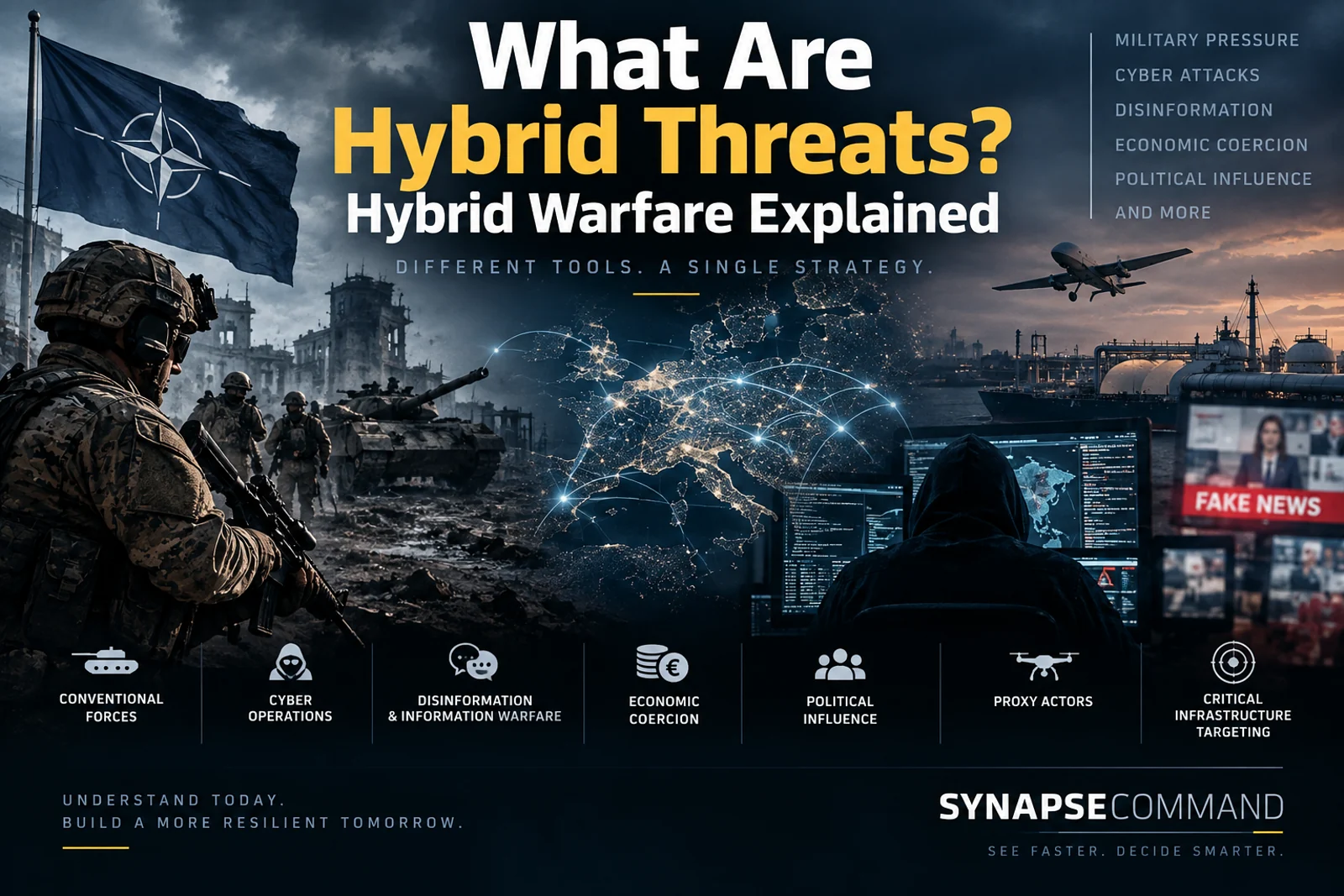
Hybrid threats are coordinated harmful activities carried out with malign intent to undermine a target such as a state or institution through a variety, and often a combination, of means. They can include cyber operations, information manipulation, sabotage, economic coercion, covert political activity and military pressure. Hybrid campaigns often exploit vulnerabilities, ambiguity and difficulties of detection and attribution, frequently while operating below the threshold of open armed conflict.
Read the full update
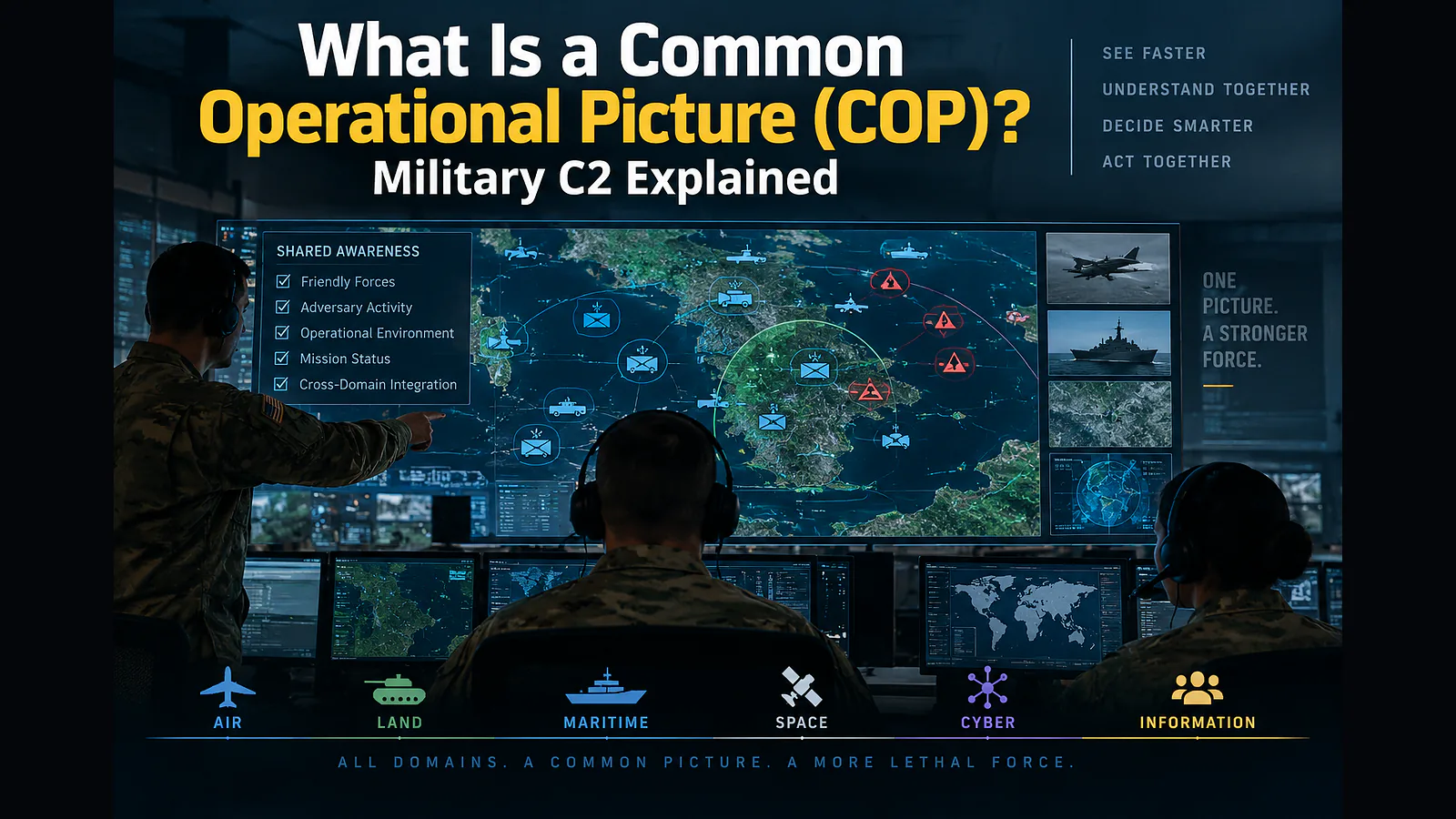
A Common Operational Picture, or COP, is a shared and dynamic representation of operational information that can be tailored to support situational awareness, collaborative planning and decision-making. In military command and control, a COP brings relevant information from multiple sources into a shared, mission-focused picture. It is not simply a digital map, and it is not necessarily a single software application.
Read the full update
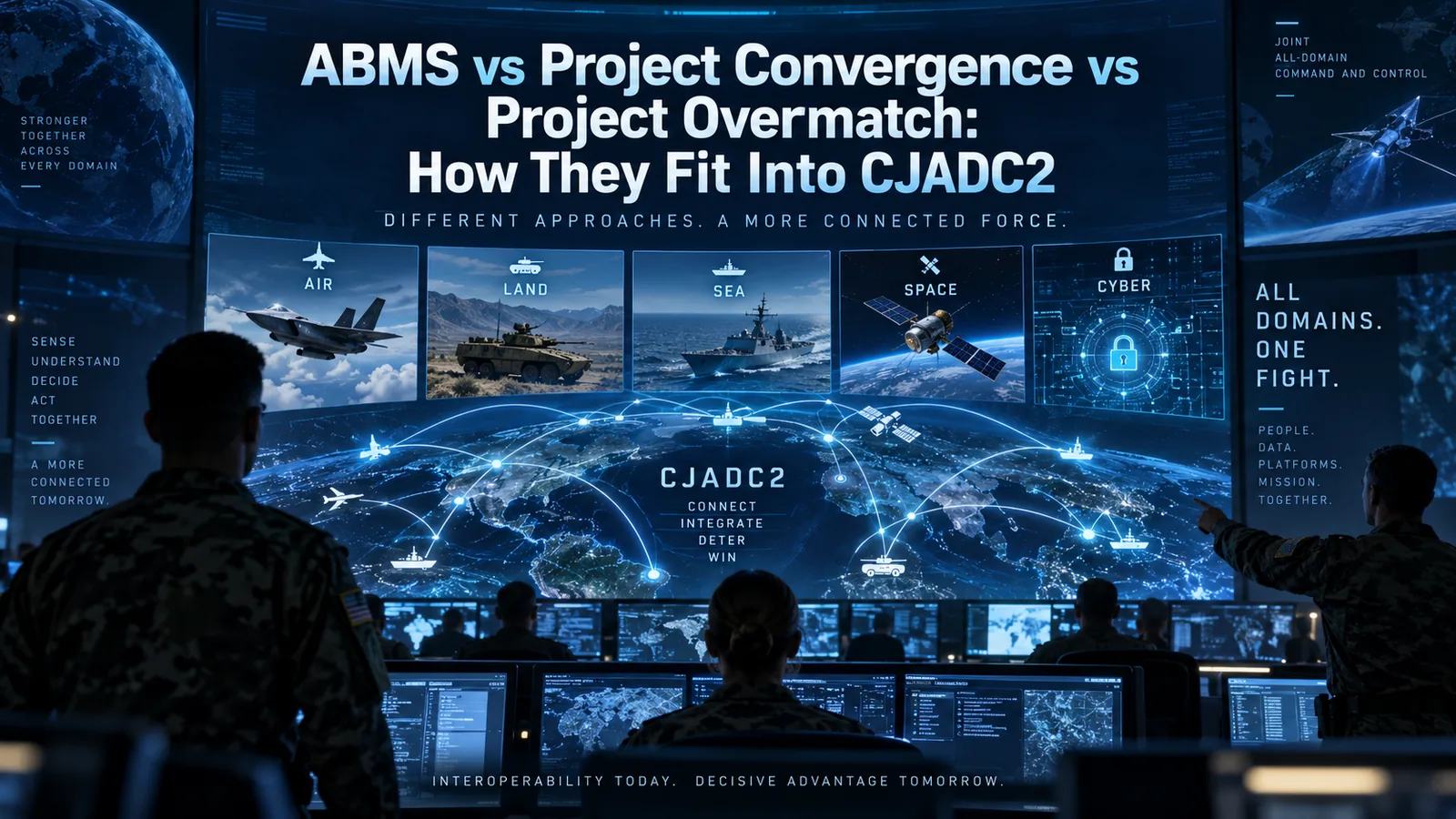
ABMS, Project Convergence and Project Overmatch are three major U.S. military efforts commonly associated with Combined Joint All-Domain Command and Control, or CJADC2, but they are not three equivalent programmes. In 2026, the Department of the Air Force identifies the DAF Battle Network as its contribution to CJADC2, with ABMS funding a subset of its capabilities. Project Convergence is the Army's major experimentation campaign, while Project Overmatch develops and delivers the Navy's Naval Operational Architecture for distributed maritime operations.
Read the full update
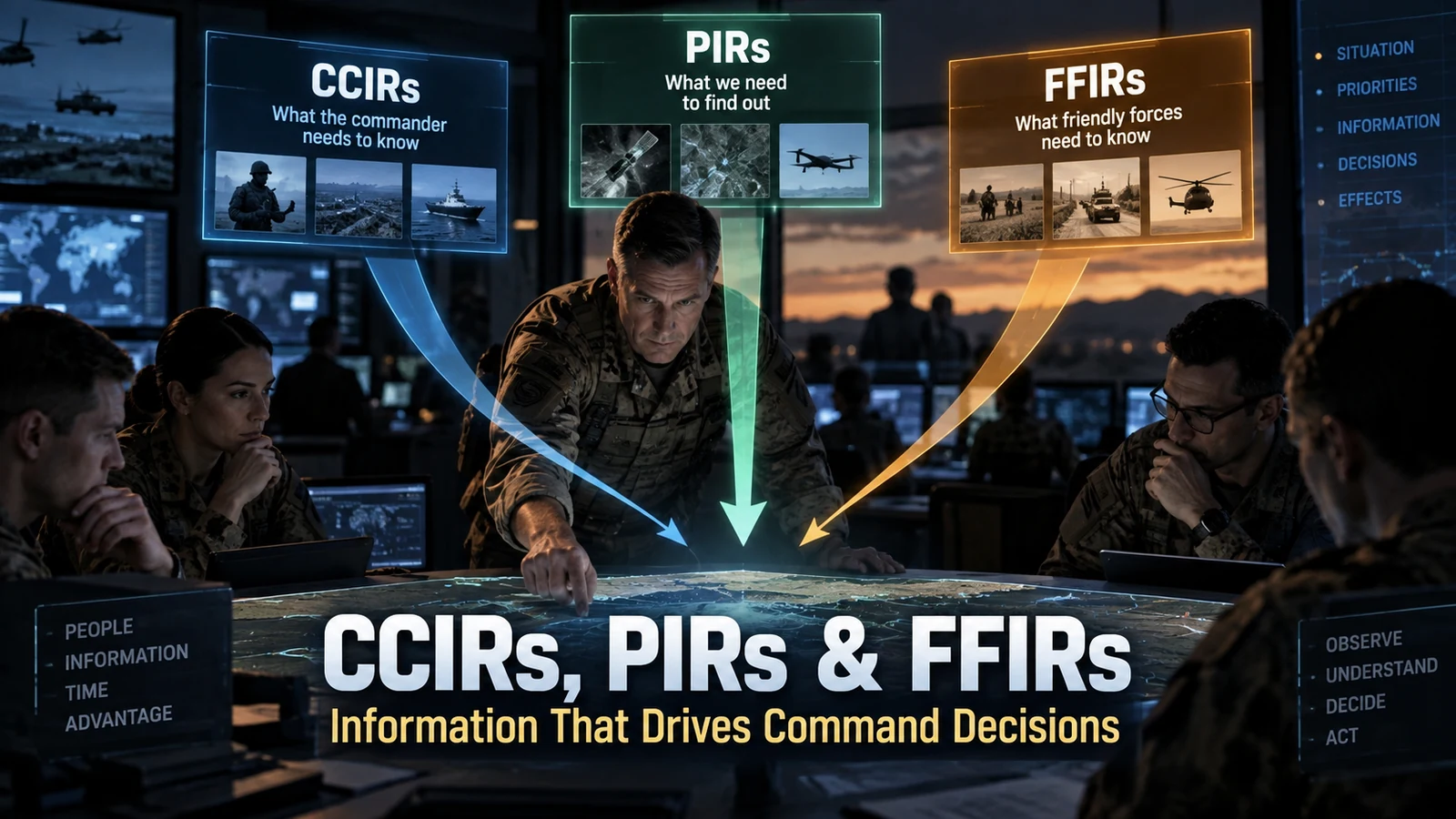
Commander's Critical Information Requirements, usually shortened to CCIRs, are the small set of information requirements a commander identifies as critical to timely decision-making. This guide explains how Priority Intelligence Requirements and Friendly Force Information Requirements differ, and how CCIRs connect information to decision points.
Read the full update
Federated Mission Networking, or FMN, is a NATO-led framework that helps nations and partner organisations establish interoperable mission networks for operations, exercises and other multinational activities. This guide explains what federation means, what Spiral Specifications are, and why FMN is a framework rather than one permanent network.
Read the full update
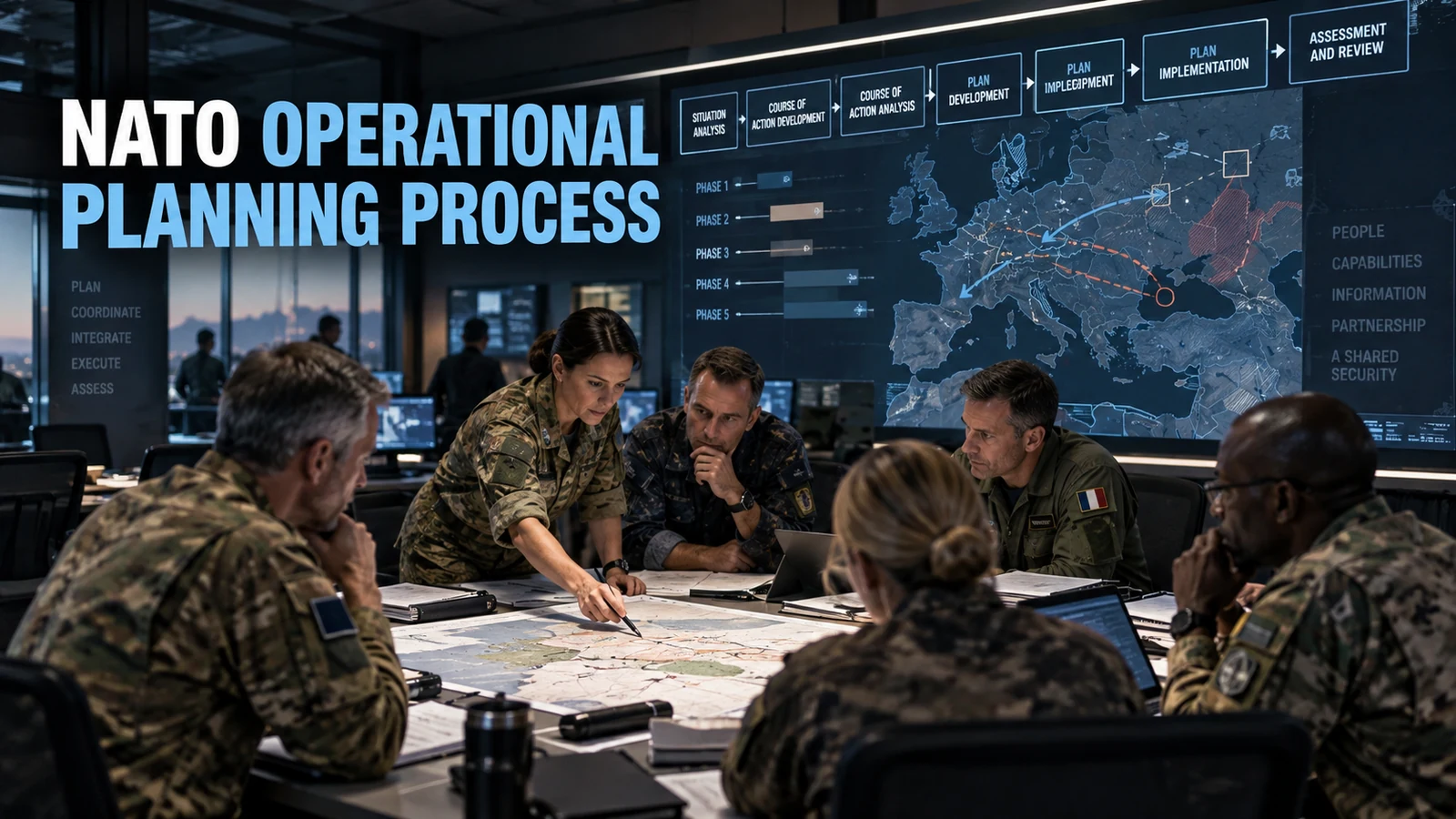
The NATO Operational Planning Process, usually shortened to OPP, is the structured method used by NATO commanders and staffs to turn strategic direction into operational plans. This guide explains the planning logic, mission analysis, course of action development and comparison, plan production, and how AJP-5, COPD and TOPFAS relate to the process.
Read the full update
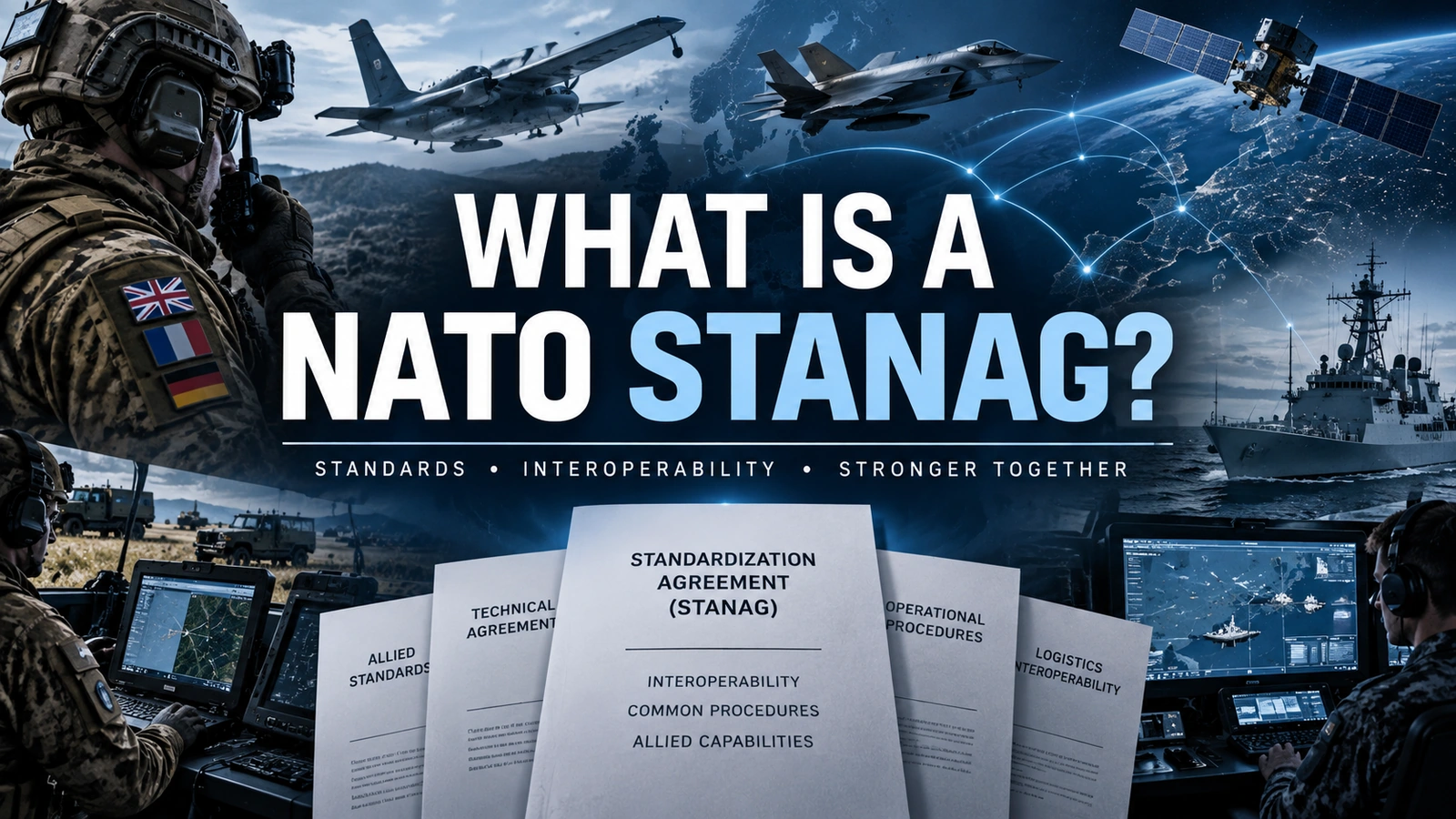
A NATO Standardization Agreement, commonly called a STANAG, records an agreement among member nations to implement a standard in order to meet an interoperability requirement. This guide explains what a STANAG is, how ratification and implementation work, and how STANAGs relate to Allied Publications.
Read the full update
Multi-Domain Operations, usually shortened to MDO, is NATO's approach to orchestrating military activity across all operational domains and synchronising it with relevant non-military activity. This guide explains the five operational domains, what converging effects means, how MDO differs from joint operations and why interoperability matters.
Read the full update
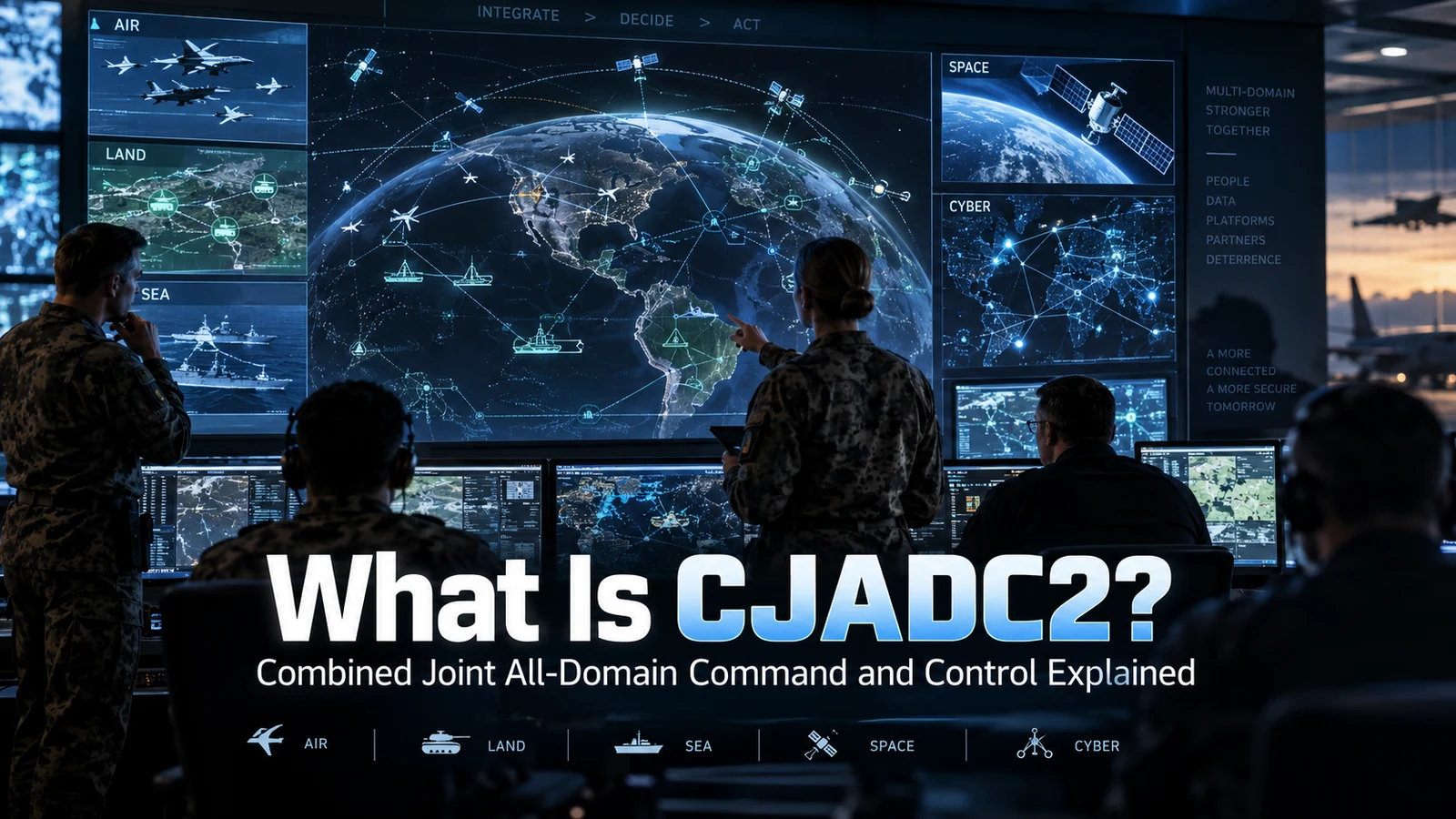
CJADC2 is the U.S. Department of Defense approach to connecting data, sensors, command systems and decision-makers across military domains and with mission partners. Here is what it means, how it is evolving and why interoperability is central to it.
Read the full update
What the Maven Smart System is, how it grew out of Project Maven, and what its expansion across U.S. and NATO operations means for AI-enabled command and control.
Read the full update
SynapseCommand was demonstrated during NATO's "FIGHT TONIGHT!" event at Supreme Headquarters Allied Powers Europe (SHAPE) in Mons, Belgium, bringing the platform directly in front of NATO operational and technical stakeholders working on the Alliance's digital battlespace.
Read the full update
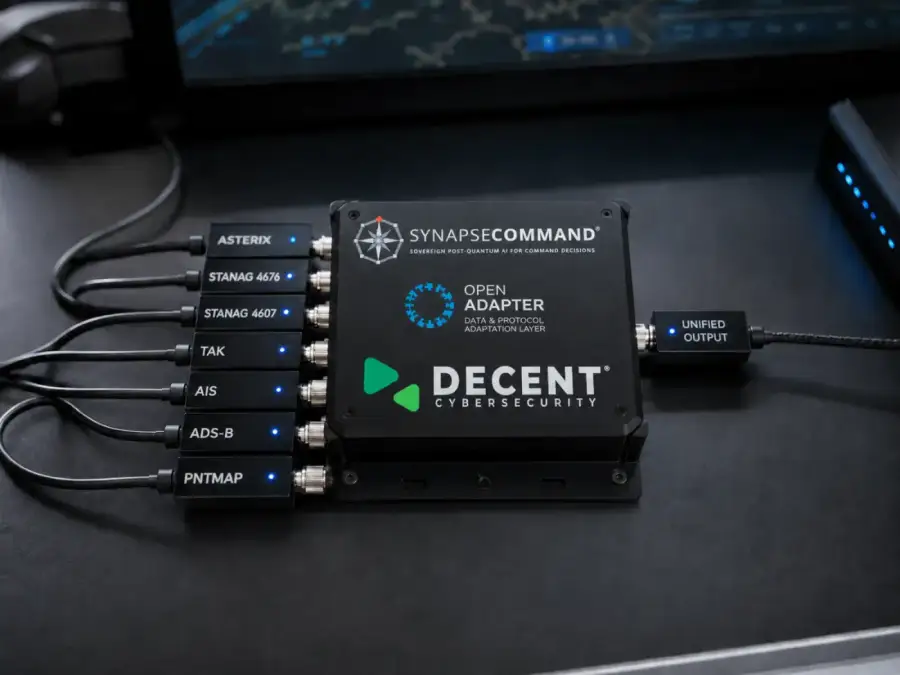
Decent Cybersecurity has published the complete interoperability layer of the SynapseCommand platform under the Apache 2.0 licence, giving partners, system integrators and procurement authorities immediate, independently verifiable access to the platform's data contract.
Read the full update
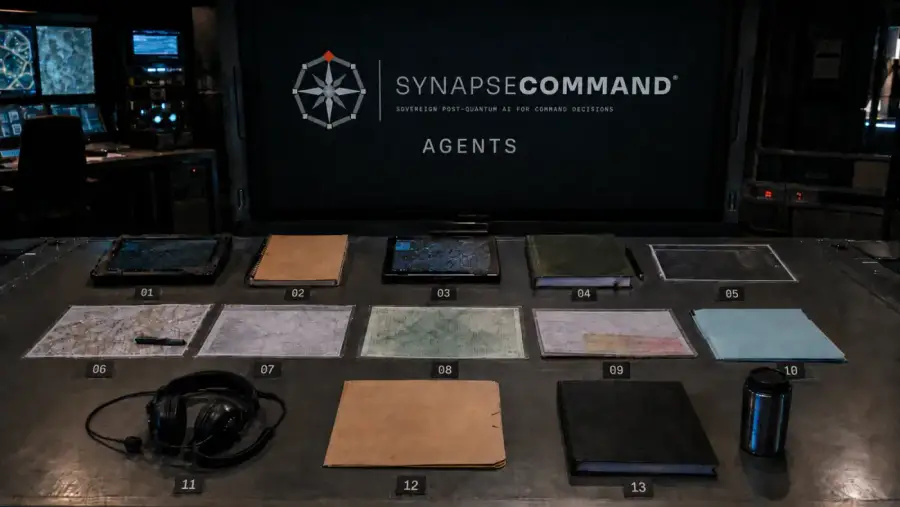
The current release of SynapseCommand presents the Warfighting Agent Suite in full, including the training-only White Force module that is compiled out of operational builds.
Read the full update
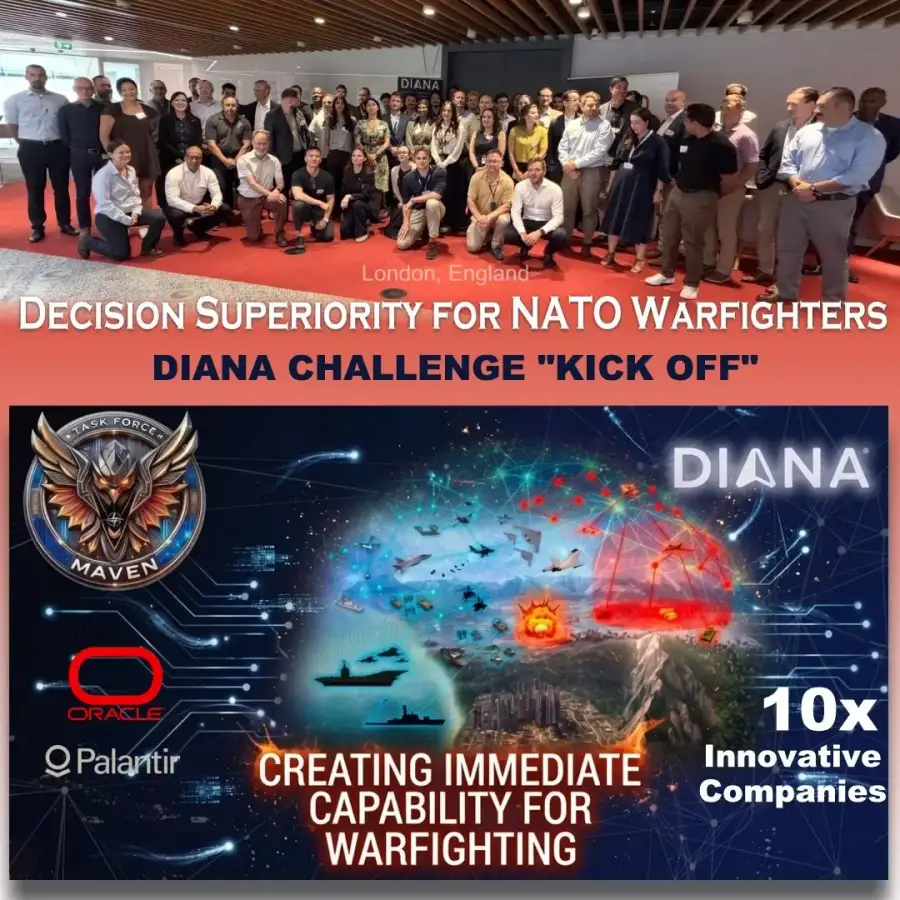
Decent Cybersecurity joined nine other selected companies in London for the kickoff of NATO DIANA's "Decision Superiority for NATO Warfighters" Challenge, run with Task Force Maven at Allied Command Operations.
Read the full update
Decent Cybersecurity has been selected by DIANA for the 'Decision Superiority for NATO Warfighters' programme as one of ten companies, each receiving €100,000 towards a live demonstration by December 2026. Selected in the NATO DIANA Decision Superiority Challenge, ranking in the top 2.34% of 427 submissions across 29 Allied nations.
Read the full update