
Where decision superiority matters most.
Five representative military AI use cases for command and control, each showing what goes in, which modules reason over it, and what the commander receives. Every schematic below is illustrative; the deployed pipeline is configured to your sensors, doctrine and accreditation boundary.
Maritime & subsea-infrastructure protection
Continuous fusion of radar, AIS, SAR, OSINT and SIGINT to detect anomalous UAV and vessel activity around critical maritime and subsea infrastructure. SynapseCommand® generates ranked, traceable courses of action and seals the evidence chain for downstream legal and operational use. Related news: SynapseCommand at NMIOTC.

Built, versioned and independently removable; the training-only White Force module is excluded from operational builds
Design property: every decision event is written to a hash-chained, append-only record, with ML-DSA signing in assured deployments
- Coastal & OTH radar
- AIS / VMS feeds
- SAR imagery tasking
- Maritime OSINT
- SIGINT cueing
Registered agents carry an SC- identifier; other entries are platform services or functions within an agent.
- Anomaly dossier with confidence bounds and contributing sensors
- Three ranked COAs with legal and escalation notes
- Evidence bundle designed to support evidential integrity, chain-of-custody and legal review; admissibility remains jurisdiction- and procedure-dependent
Multi-domain wargaming & COA analysis
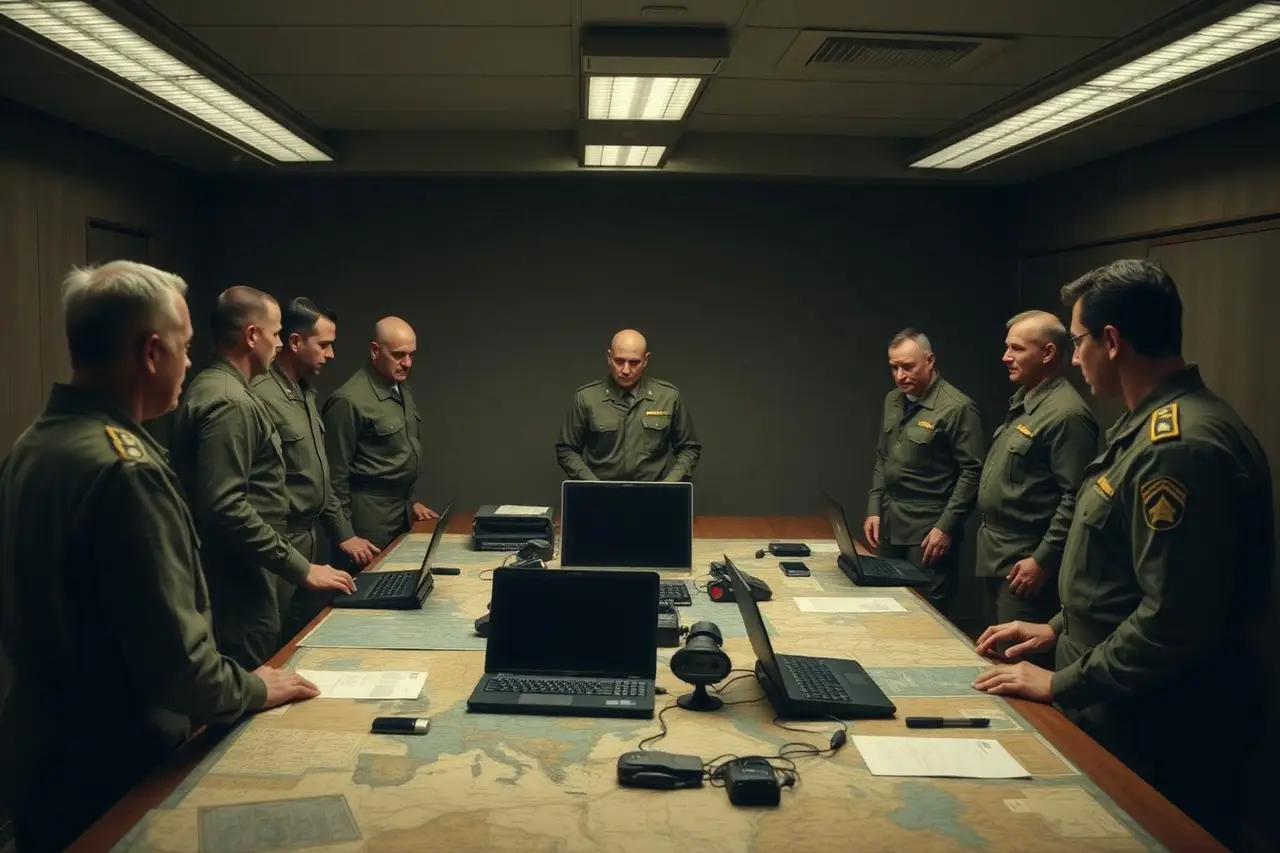
Red and blue agents simulate adversary doctrine and friendly posture across land, maritime, air, space and cyber. For the wider NATO operational concept behind cross-domain coordination, see Multi-Domain Operations explained. The COA Analysis Engine explores high-dimensional outcome spaces with reinforcement learning, Bayesian inference and Monte Carlo methods.
Customer-configurable; default sampling depth in the reference configuration
318 verification cases, each run three times against each of two model families; one file per agent per model set, with commit, versions, models and per-case pass rates
- Order of battle
- Doctrinal templates
- Terrain & METOC
- Logistics state
- Cyber & EW posture
Registered agents carry an SC- identifier; other entries are platform services or functions within an agent.
- Branch-and-sequel tree with probability-weighted outcomes
- Decision points, triggers and commander's critical information requirements
- Sensitivity analysis showing which assumptions move the result
Coalition operations across allied nations
Allied nodes federate reasoning across the Post-Quantum Coalition Fabric. In the reference federated deployment, source records remain at the originating node. Only policy-authorised queries, derived outputs and required provenance metadata cross the federation boundary. Exceptions and configuration choices, including what derived artefacts (e.g. embeddings, model outputs, confidence values) may cross the boundary, are documented per deployment. Policy-based output filtering and release controls apply to each output, tested against semantic and indirect information leakage; provenance is preserved across the whole coalition.

Enforced by a test that parses every file
Customer-configurable; tested federation size in a representative test environment
Design property: every output passes policy-based release filtering before disclosure
- National enclaves
- Releasability caveats
- Coalition PKI
- Shared mission graph
Registered agents carry an SC- identifier; other entries are platform services or functions within an agent.
- Shared operating picture assembled from local inference only
- Per-token releasability decisions, individually attributable
- Coalition-wide provenance chain surviving node disconnection
Counter-UAS & short-range air defence
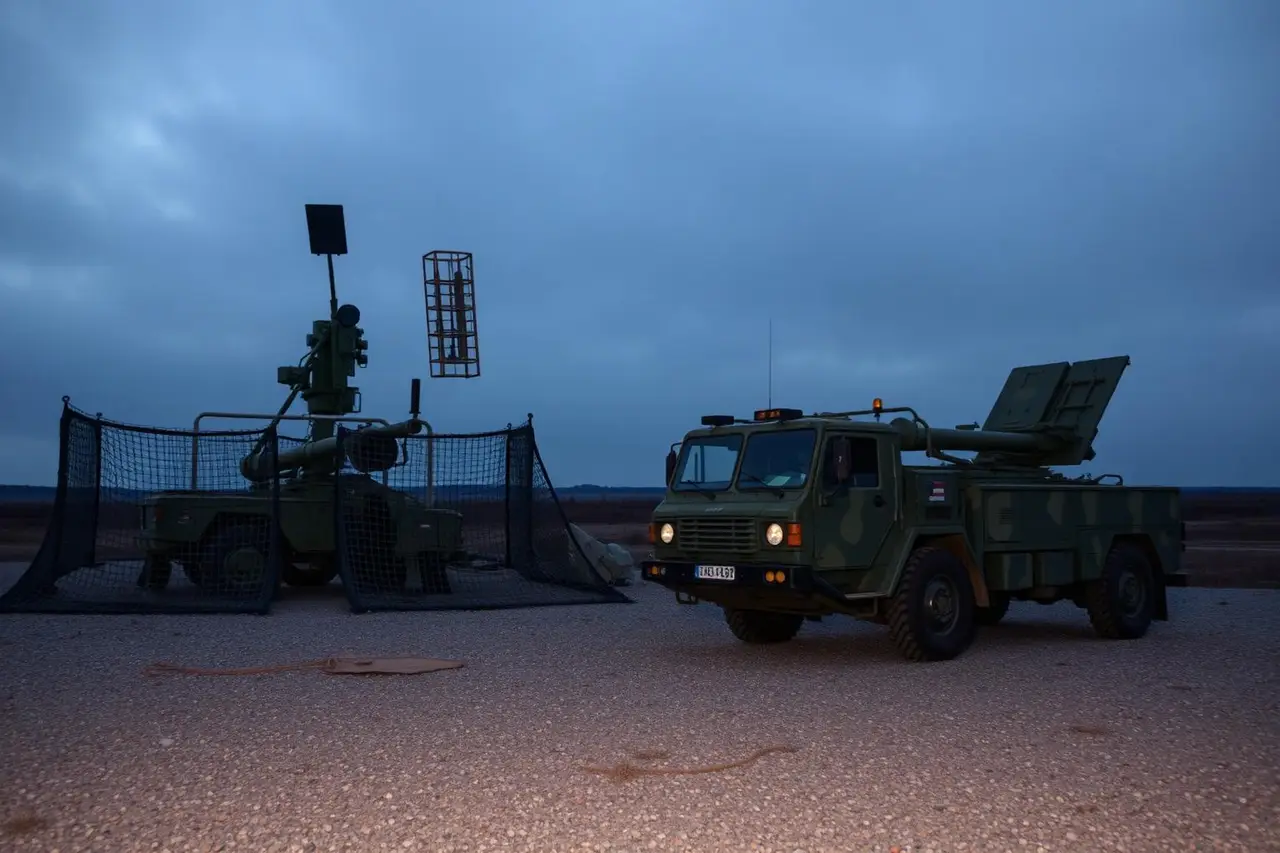
Low, slow and small threats compress the decision cycle to seconds. SynapseCommand® correlates passive RF, EO/IR and radar into a single track picture, applies rules of engagement as executable policy, and presents the operator with a pre-validated response recommendation, human-in-the-loop: engagement requires explicit approval by a qualified operator, after which the approved recommendation is passed to the host fire-control system, which tasks the effector. SynapseCommand does not fire or command an effector directly.
Across 81 test files, 29 agent-side and 52 platform-side; plus 484 engine and conformance tests and 418 offline tool assertions covering 361 tool invocations
Design property: every engagement recommendation passes the configured policy set; operator approval remains mandatory
- Passive RF detection
- EO/IR trackers
- SHORAD radar
- Airspace control order
- ROE policy set
Registered agents carry an SC- identifier; other entries are platform services or functions within an agent.
- De-duplicated track with classification confidence per sensor
- ROE-checked engagement recommendation and alternatives
- Sub-four-second detect-to-decision timeline, fully logged
Predictive sustainment & logistics resilience
Sustainment failure ends operations more often than contact does. The platform forecasts Class I–IX consumption against the current scheme of manoeuvre, scores convoy and route risk, and proposes re-allocations before the shortfall becomes a culminating point.

Customer-configurable forecast horizon in the reference configuration
Design property: every planned route is scored before it is presented
- Consumption telemetry
- Convoy & route data
- Maintenance state
- Scheme of manoeuvre
- Host-nation support
Registered agents carry an SC- identifier; other entries are platform services or functions within an agent.
- 72-hour shortfall forecast by supply class with confidence bands
- Re-routing and cross-levelling options ranked by operational impact
- Traceable sustainment record, with ML-DSA signing in assured deployments, for audit and coalition reconciliation
Verification record by agent
The totals above are platform-wide. The table below records the verification position of each agent individually: each case runs three times against each of two model families, and a case is recorded as passing only when it passes on every run.
| Agent | Verification cases | Model-bearing runs | Model sets | Readiness |
|---|---|---|---|---|
| SC-RED-01 Red-Force Behaviour Agent | 27 | 162 | 2 | TRL 7 |
| SC-BLUE-01 Blue-Force Posture Agent | 23 | 138 | 2 | TRL 7 |
| SC-ISR-01 ISR Fusion Agent | 30 | 180 | 2 | TRL 7 |
| SC-SCN-01 Scenario Synthesis Agent | 22 | 132 | 2 | TRL 7 |
| SC-COA-01 COA Analysis Engine | 22 | 132 | 2 | TRL 7 |
| SC-TGT-01 Targeting & Engagement Agent | 25 | 150 | 2 | TRL 7 |
| SC-PLAN-01 Operational Planning Agent | 21 | 126 | 2 | TRL 7 |
| SC-LES-01 Lessons-Learned & Assessment Agent | 24 | 144 | 2 | TRL 7 |
| SC-LOG-01 Logistics Agent | 33 | 198 | 2 | TRL 7 pending |
| SC-LNP-01 Logic & Planning Agent | 27 | 162 | 2 | TRL 7 pending |
| SC-STR-01 Strategy & Doctrine Agent | 21 | 126 | 2 | TRL 7 pending |
| SC-WHT-01 White Force Agent | 22 | 132 | 2 | TRL 7 pending |
| SC-ATO-01 Air Tasking Agent | 21 | 126 | 2 | TRL 7 pending |
| SC-MET-01 Weather Agent | Not yet recorded | TRL 7 pending | ||
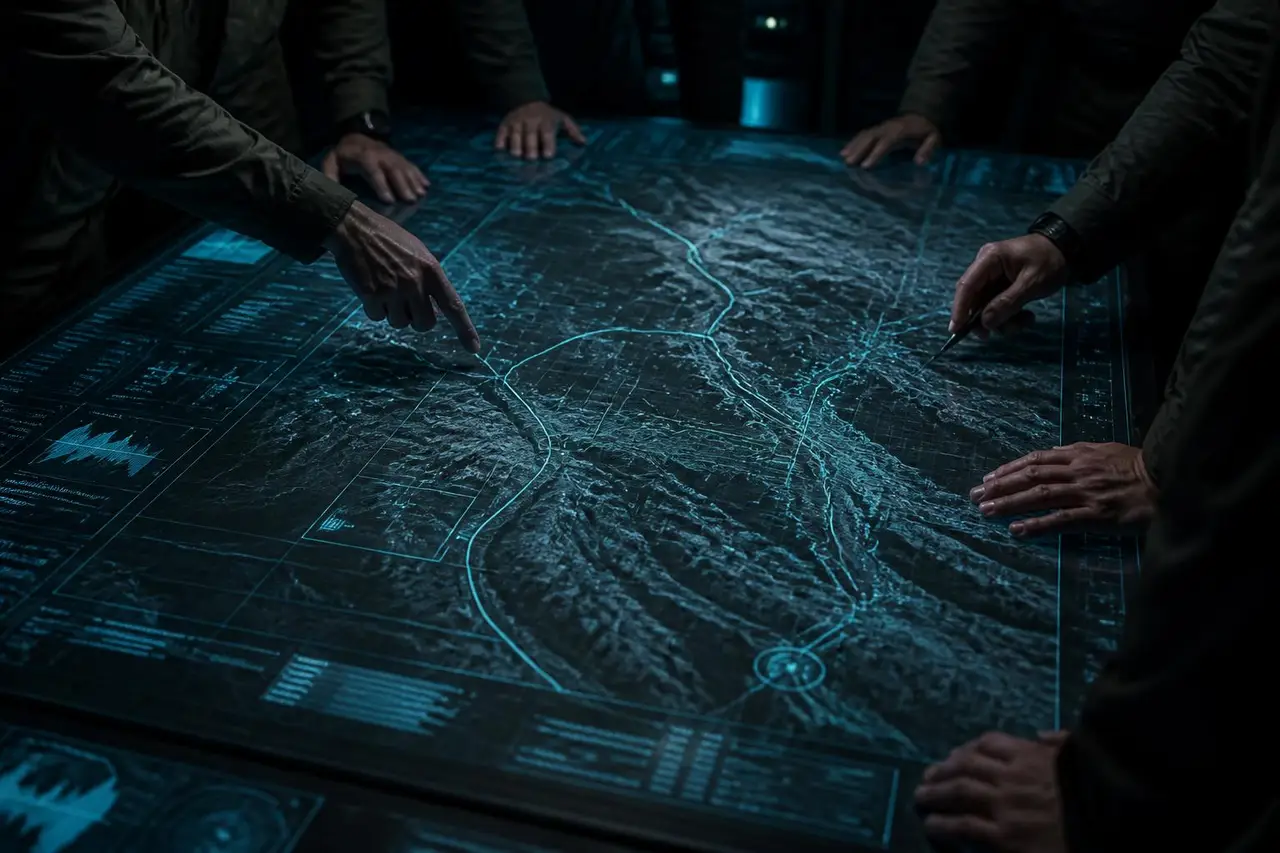
Full kill chain, end to end.
Find, Fix, Track, Target, Engage, Assess. Watch SynapseCommand® run the complete chain with every agent hand-off, rules-of-engagement gate and audit event exposed. Illustrative data only.
Your mission profile isn't listed?
SynapseCommand® is configured per deployment. Bring your sensors, doctrine and accreditation constraints and we will map them to the agent mesh under NDA.