
Architecture

Sovereign military AI architecture, in full.

A vertically integrated, sovereign architecture, with customer-controlled data, configuration, fine-tuned artefacts and deployment environment, and component ownership and licensing documented in the software bill of materials.

The stack

Seven layers. One sovereign stack.

L7 Commander → L1 Infrastructure

SynapseCommand is one deployable stack; the names below are Decent Cybersecurity product marks for its layers.

The STANAG-aligned data plane in Layer 3 is documented standard by standard, with the supported direction of exchange for each one, in the interoperability register.

Commanders working at a sovereign command centre console
L7

CommanderNL™

Natural-language commander interface.

Classification-aware conversational layer translating commander intent into agent actions and presenting ranked, explainable options. CommanderNL™ is the commander gateway through which operators task the stack.

CommanderNL™
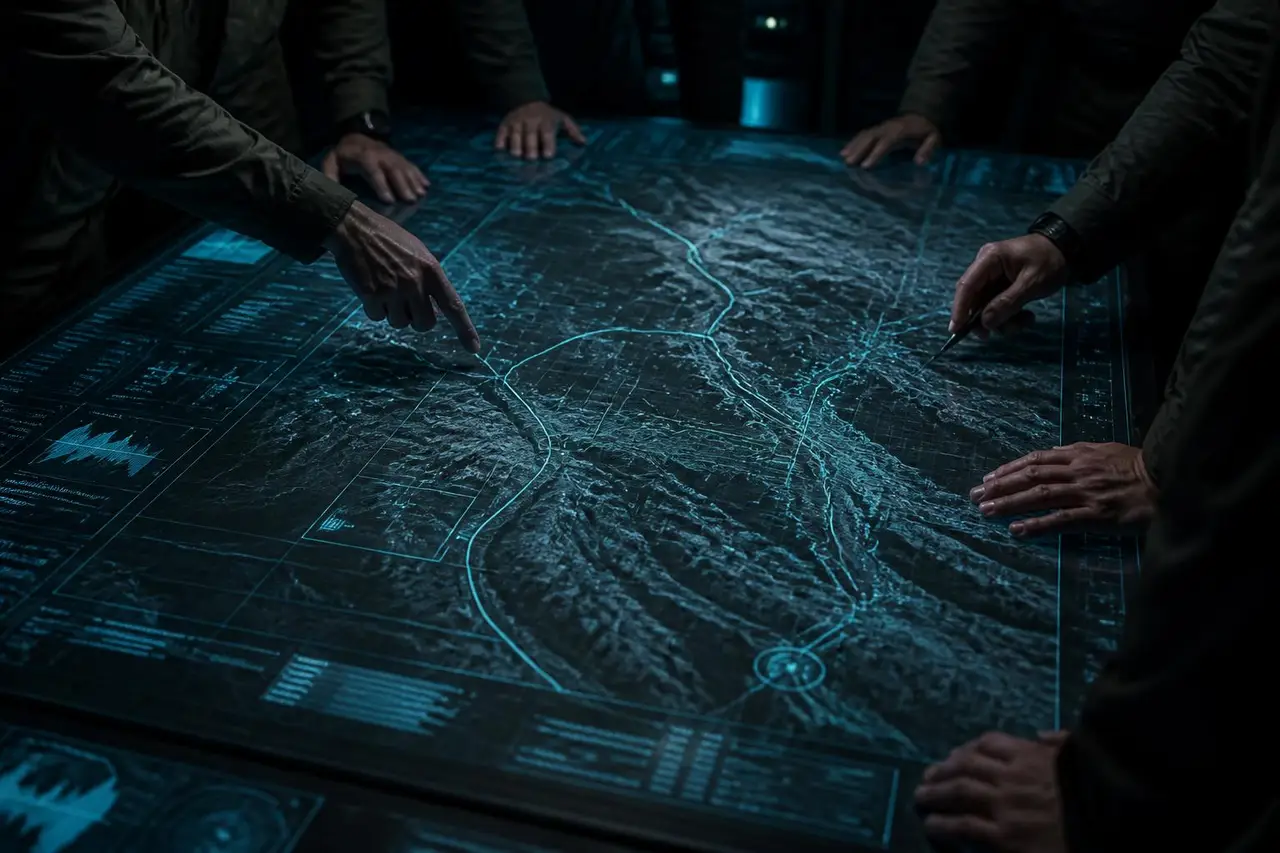
Operational planning table with force disposition overlays
L6

Warfighting Agent Suite

Doctrinally grounded agent modules on one sovereign mesh.

Red-Force, Blue-Force, ISR Fusion, Scenario Synthesis, COA Analysis, Targeting & Engagement, Operational Planning, Lessons-Learned, Logistics, Logic & Planning, Strategy & Doctrine, Air Tasking, plus the training-only White Force module that is compiled out of operational builds. Agents reason in parallel and coordinate through the sovereign Agent Mesh, with the combination set by mission requirements. SynapseMesh™ brands the agent orchestrator and VerityGridAI™ brands the model evaluator.

SynapseMesh™VerityGridAI™
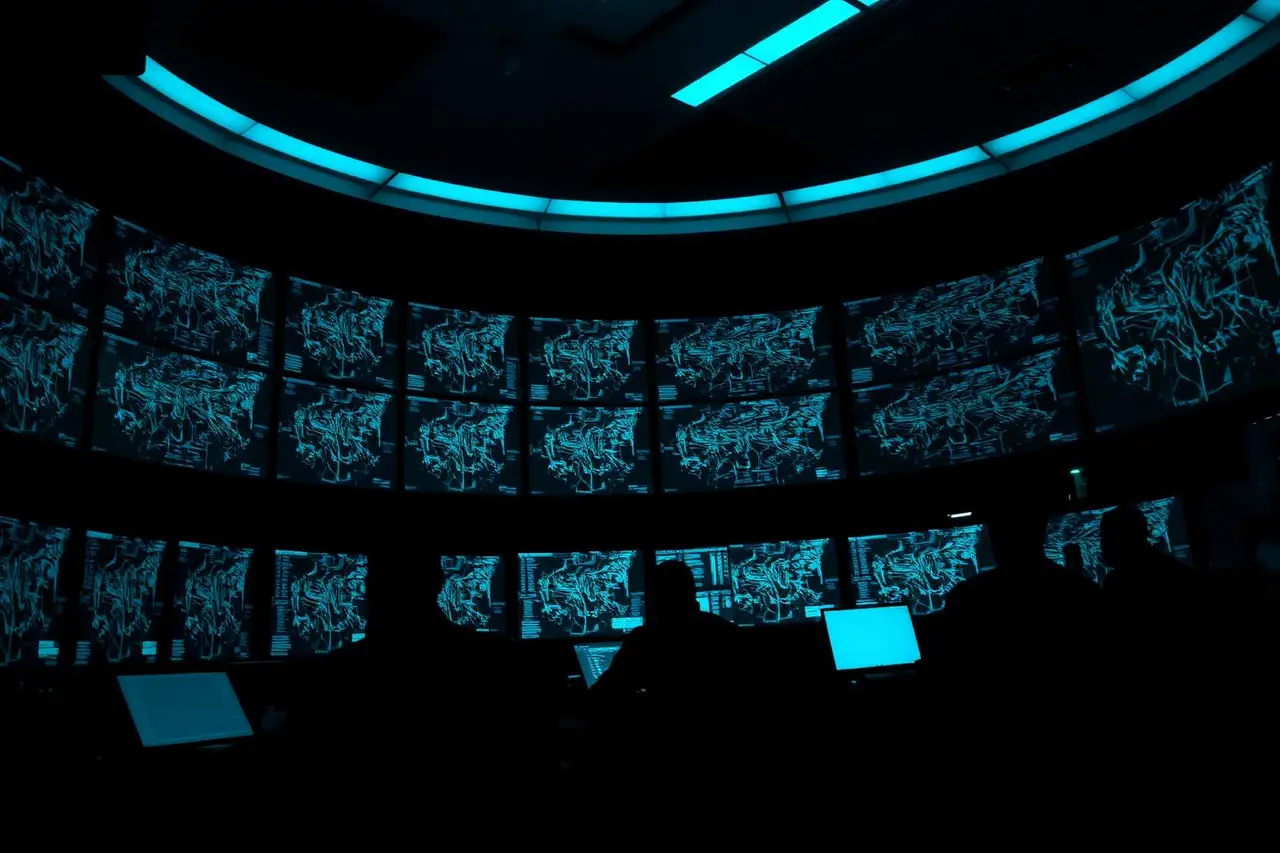
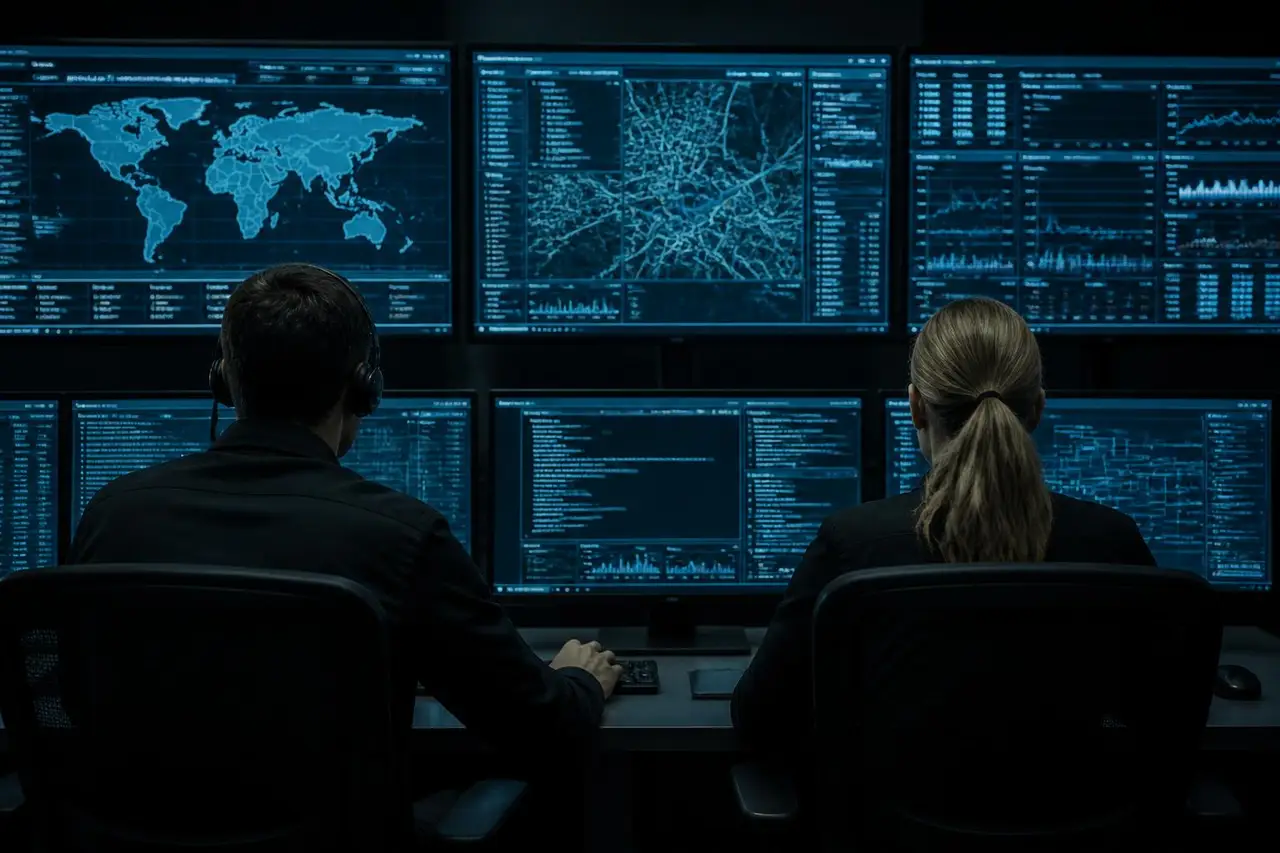
Network operations centre wall with live topology graphs
L5

Agent Mesh Orchestration

Sovereign multi-agent coordination.

Deterministic routing, capability discovery, policy enforcement and observability across all agents, with no mandatory external inference service or hyperscaler control plane. Agent health, integrity and performance are continuously verified through SynapseSentry™. SynapseMesh™ is the orchestrator; SynapseSentry™ is the supervisor console.

SynapseMesh™
Agent health · SynapseSentry™
Hardware security modules forming the trust chain
L4

Trust, Assurance & Provenance

TEVV, explainability, cryptographic logging.

Continuous testing, evaluation, verification and validation of every model. Every event is written to a hash-chained, append-only decision record; in assured deployments records are signed with ML-DSA, and records produced without an active signing key are explicitly marked UNVERIFIED. VerityGridAI™ is the evaluator and CyberFort Blockchain™ is the provenance registry.

VerityGridAI™CyberFort Blockchain™
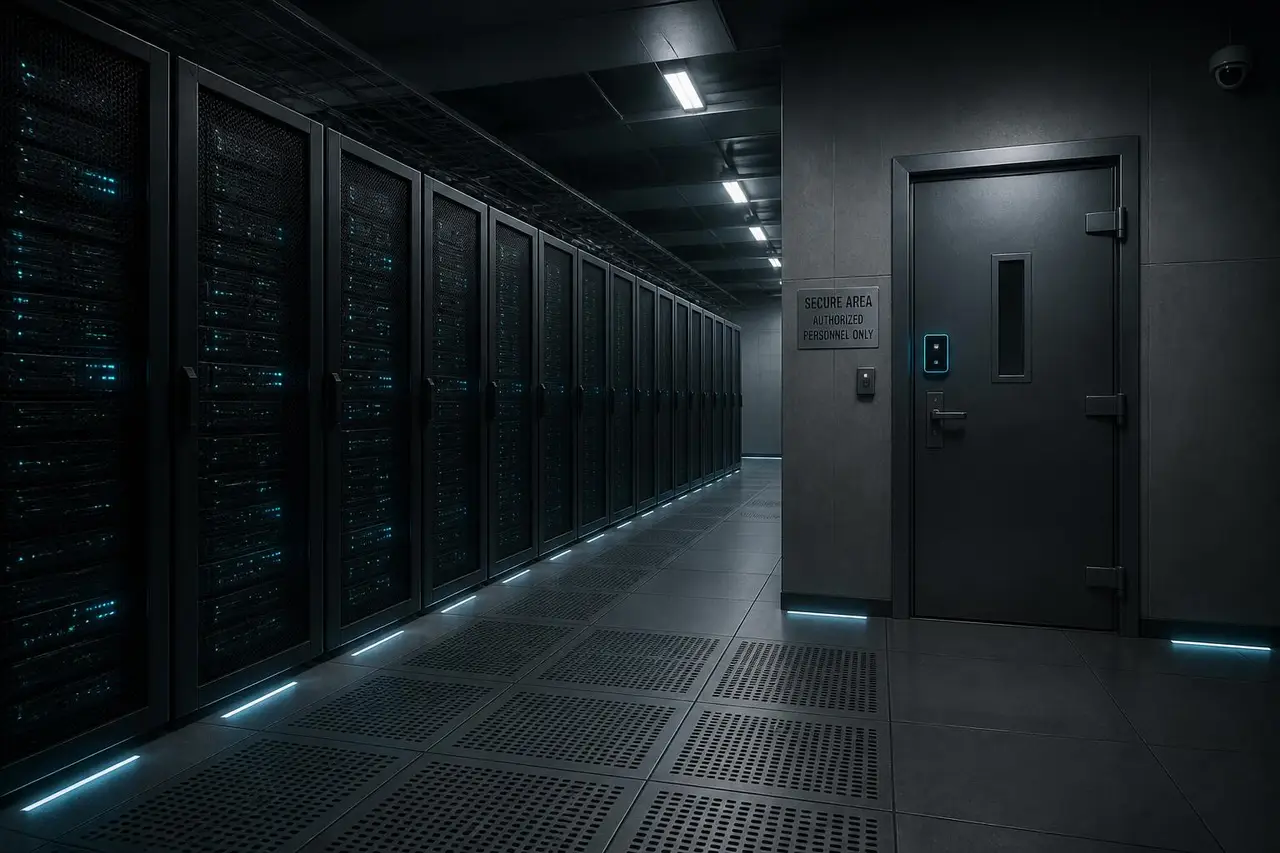
Sovereign data centre aisle
L3

Sovereign Data Fabric

Your data, your weights, your jurisdiction.

Classification-aware data plane spanning ISR, OSINT, force tracking and logistics, STANAG-aligned, with full lineage. The classification-aware data gateway enforces labelling at the boundary; CryptoSleuth Pro™ brands the ingest console.

CryptoSleuth Pro™
Cryptographic laboratory with fibre interconnects
L2

Post-Quantum Coalition Fabric

PQ-secure, federated allied operations.

Hybrid post-quantum networking enabling federated reasoning across allied nodes. In the reference federated deployment, source records remain at the originating node. Only policy-authorised queries, derived outputs and required provenance metadata cross the federation boundary. QuantumProof Protocol™ is the federation gateway, CipherLayer™ the key registry and PQ-STRAT™ the cryptographic evaluator. The Coalition Federation Interface is the policy-controlled information-exchange function through which Layer 1 applications consume these services.

QuantumProof Protocol™CipherLayer™PQ-STRAT™Coalition Federation Interface
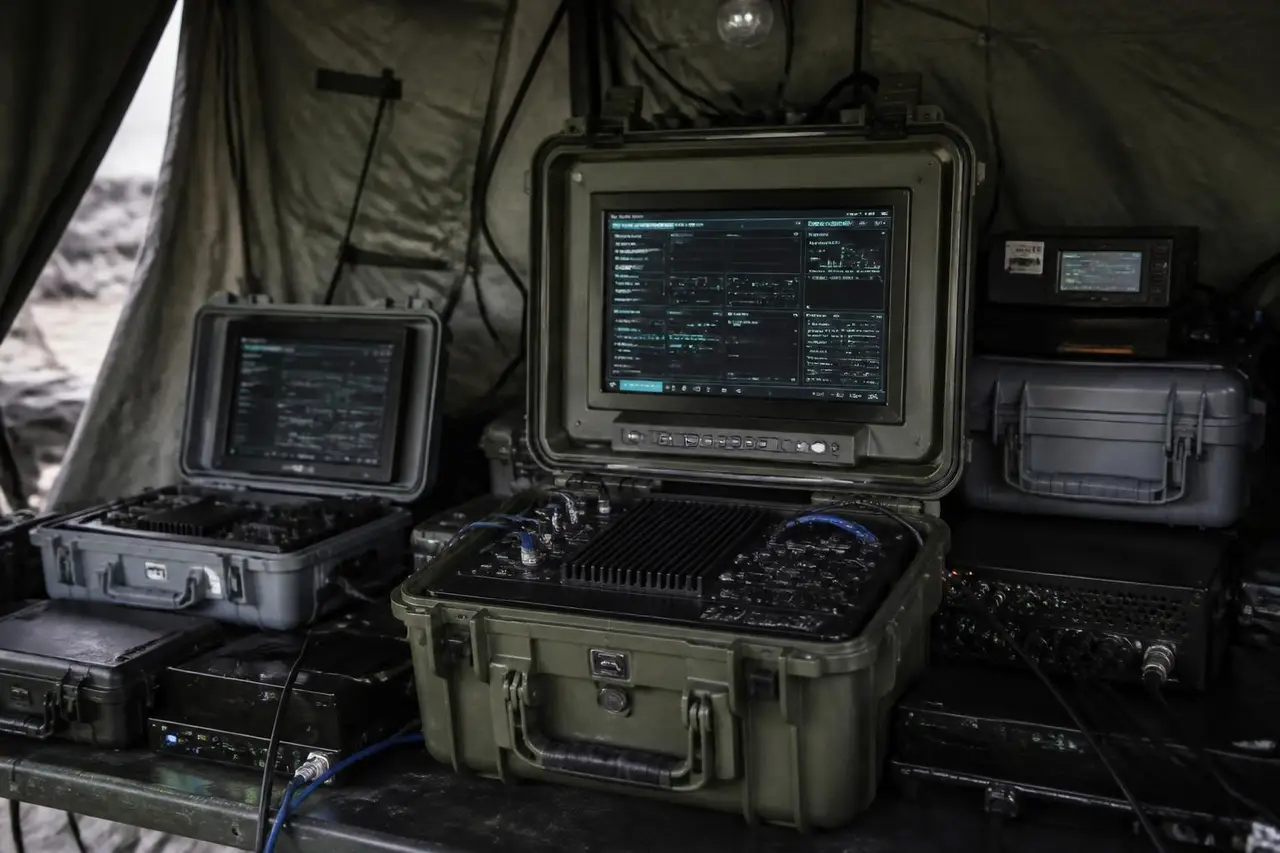
Ruggedised tactical edge node deployed in the field
L1

Sovereign Infrastructure

On infrastructure you control.

Sovereign cloud, on-prem classified, or air-gapped tactical. Domain-aware adapters for land, maritime, air and space. AeroLink™ is an air-domain operator application and console in this layer. In coalition deployments it consumes authorised federation and information-exchange services provided by Layer 2; it does not replace or constitute the coalition-fabric layer. DroneCrypt UTM™, SecureSat Guardian™ and SpaceShield STM™ are the corresponding consoles and registries for UTM, space and electromagnetic operations.

AeroLink™DroneCrypt UTM™SecureSat Guardian™SpaceShield STM™

Cryptographic provenance · end to end

Architecture principles

Six design rules govern every layer of the stack, from hardware root-of-trust to the commander's screen.

Sovereign data centre aisle with sealed racks
P-01

Data flow

Classified and unclassified data planes are physically and cryptographically separated. Every artefact carries lineage and classification metadata.

Network operations wall showing live agent topology
P-02

Agent orchestration

Deterministic capability discovery, policy-aware routing, structured tool use and full observability across the Agent Mesh.

Hardware security modules used for sovereign key custody
P-03

Trust chain

From hardware root-of-trust to the commander's screen, every event is hash-chained; in assured deployments each record is ML-DSA-signed and every signature is verifiable, and records produced without an active signing key are marked UNVERIFIED.

Cryptographic laboratory bench with fibre interconnects
P-04

Federation

Allied nodes federate reasoning over the Post-Quantum Coalition Fabric. In the reference federated deployment, source records remain at the originating node. Only policy-authorised queries, derived outputs and required provenance metadata cross the federation boundary.

Ruggedised tactical edge node deployed in a field shelter
P-05

Resilience

Designed for DDIL conditions (degraded, denied, intermittent, limited bandwidth), including fully air-gapped tactical operation.

Accredited command centre operating floor
P-06

Accreditation

Built to align with NATO, EU and national accreditation regimes; ISO 27001 and NIS2 audit-ready.